Unfortunately, there currently isn’t anything on the market that will stop us from ageing, but we can do something to limit its impact. It doesn’t have to cost the earth and it doesn’t have to take up too much time either.
Our age alone does not determine our ability or capacity, but records suggest adults over 65 years old have higher incidences of health conditions from heart conditions, diabetes and falls to depression and dementia.
How often should we exercise?
Prolonged sedentary behaviour is associated with many poor health conditions, especially in more senior adults. Increasing light-intensity activity, especially in adults who currently undertake little to no moderate or vigorous activity, can have long-lasting health benefits. Adopting healthy habits like regularly going for a short walk or gardening can reduce the risk of cardiovascular disease. It is recommended that older adults undertake around 150 minutes of moderate exercise and 75 minutes of vigorous exercise each week to help them stay healthy.
What type of exercise should we be doing?
For older adults general physical function can be maintained, or even greatly improved, by performing exercises focussing on strength, balance and flexibility.
Strength Training
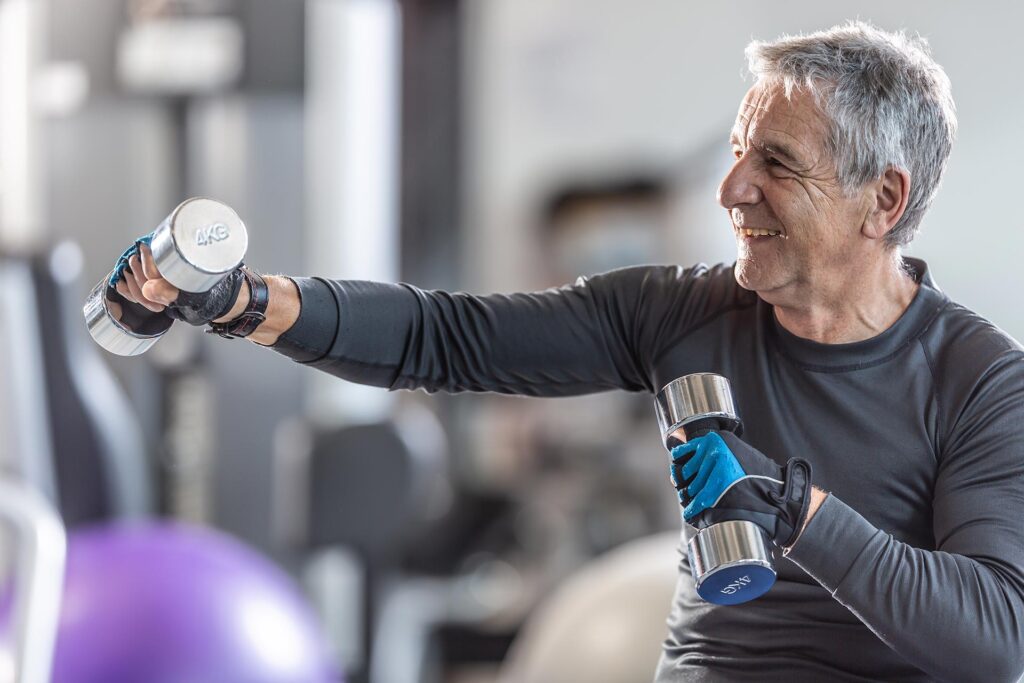
Strength training can help us maintain and increase strength as we get older, strength training or progressive resistance training twice a week on non-consecutive days will make quite a difference. Exercise focussing on building our strength includes lifting weights, push-ups, sit-ups, heavy digging in the garden or shovelling. If this sounds too much, there are plenty of exercises you can start with to improve your strength and gradually build up.
Aerobic Activity
Aerobic exercises are those that tend to make you breathe harder and faster, they increase your heart rate and can help you maintain a healthy heart, reducing blood pressure and cholesterol levels. While there are dedicated aerobics exercise classes, swimming, dancing, cycling and running are also all aerobic activities.
Flexibility
As we get older, we naturally lose flexibility, often as a result of long periods of inactivity or sedentary lifestyles. Stretching can be used to improve flexibility which can help to improve posture, movement and strength. Pilates, yoga and Tai Chi are all great activities for improving flexibility.
Even a small increase in activity levels can have a significant impact on the health and function of older adults, especially those who are not currently getting the recommended amount of weekly exercise. Regular exercise can also help to prevent osteoporosis and reduce the risk of falling by increasing bone density and aiding muscle growth.
Being active can also, of course, help with mental health and when exercise is performed in a group setting it can help to limit social isolation and depression.
As an experienced and qualified osteopath, I believe that osteopaths and all allied health professionals should be encouraging all their patients to undertake regular exercise to help maintain strength, flexibility and balance. Osteopaths do not only treat back pain, an osteopath with a background in exercise rehabilitation or strength and conditioning will be able to help any of their patients maintain active and healthy lifestyles.
Walnut Grove Studio has several fitness classes suited for older adults, as does Walnut Grove CIC. These range from healthy heart sessions and Pilates classes to seated exercise and one-to-one guidance.
As health professionals, it’s our job to help patients reach and maintain optimum health. If you’re looking to improve your health, the team at Walnut Grove will be pleased to assist in finding the right exercise and/or treatment plan to help you. Just give us a call, drop us an email or pop into the clinic, or to find out more visit www.walnutgroveclinic.com