
Orthotics
What are Orthotics?
Orthotics are custom-made devices worn inside shoes to improve the biomechanics of the lower limb and, through it, the whole body. The way your foot strikes the ground affects everything above it – your ankles, knees, hips, and spine are all part of the same biomechanical chain, and problems at the base can have far-reaching consequences.
At Walnut Grove we carry out a complete spinal and lower limb assessment combined with objective gait analysis using state-of-the-art RS Scan footscan technology. This allows us to accurately diagnose injuries and secondary compensations, identify biomechanical abnormalities, assess posture, and screen both children and adults for potential problems before they develop further.
Where appropriate, custom orthotics are prescribed and manufactured directly from the results of your assessment, giving you a solution that is precisely tailored to your feet and your needs.
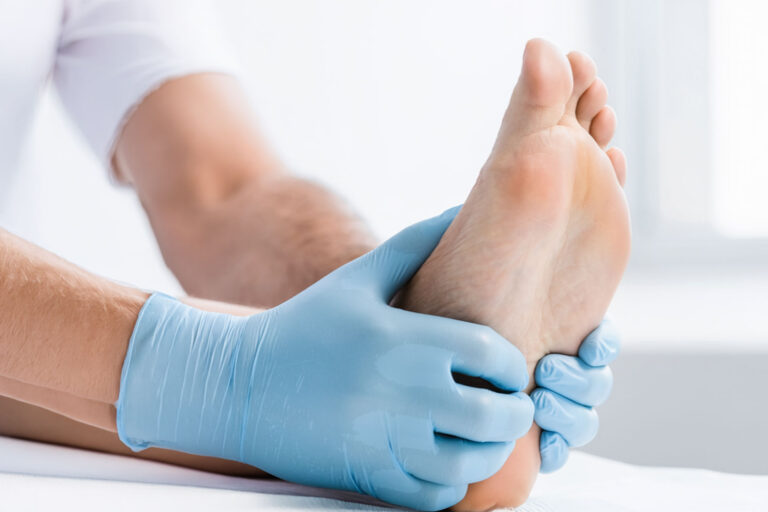

How orthotics can help you
Our Orthotics Practitioner

What our patients say
Lisa has an impressive grasp of foot mechanics and how they interact with the rest of the body, with a solid intuitive approach. Picked up a pair of orthotics yesterday, that had been constructed with a great deal of care, and straight away felt my feet were functioning more normally.
I visited Lisa Williams at Walnut Grove Clinic with my daughter to look at whether she required orthotics. We found Lisa very knowledgeable and reassuring about my daughters needs and provided us with all we needed to know about ongoing care. I would highly recommend Lisa and the Walnut Grove Clinic. Thank you.
Orthotics FAQs
What are orthotics good for?
Orthotics can be used to treat a wide range of conditions through the biomechanical chain. Commonly presenting conditions include: ankle, knee, hip and back pain or stiffness, flat or pronated feet, Achilles tendonitis, plantar fasciitis, shin splints, bunions, anterior knee pain, groin strains, ligament injuries, general leg fatigue, iliotibial band syndrome, metatarsalgia, trapped nerves, osteoarthritis, sacro-iliac symptoms, sciatica, and tarsal tunnel syndrome. If your condition is not listed, please get in touch to discuss whether orthotics could help.
Will I need to wear orthotics in all my shoes?
Ideally yes – consistent wear means your body does not have to constantly readjust. That said, if you spend most of your day at a desk but are also a keen runner, prioritising your running shoes would make the most meaningful difference.
Will they fit in my shoes?
For men, almost certainly. For women, it can be more tricky. They fit easily into trainers, since you simply remove the shoe’s own inner sole to make room. In a ladies’ court shoe, they’re unlikely to fit, and some adaptation to your day-to-day footwear may be needed. A cut-down version of your prescription orthotic can be made to fit smaller shoes, but this will compromise the level of stability and support they provide.
Are orthotics suitable for children?
Yes. Children who are still growing often have biomechanical patterns that can be corrected relatively easily at this stage, with the potential to avoid long-term problems in adulthood. Early assessment and intervention can make a significant difference.
Will I have to wear them forever?
Not necessarily. Where biomechanical challenges are significant, long-term wear may be advisable. However the goal in many cases is to train the body to improve its own mechanics with the orthotics as a support – combined with regular strengthening exercises, many patients are able to reduce their reliance on them over time.
Orthotics related articles
Why Regular Foot Care Matters More Than You Think

Why Foot Health Matters in Diabetes

Six Steps to Strong Healthy Feet