As the cold winter snap continues it can seem as if we are living through a nightmarish-Groundhog Day lasting for eternity. Winter really has taken hold and the warm summer evenings of last year are a distant memory. Temperatures have plummeted and, come 6pm, it feels like the middle of the night. We go to work in the dark and come home in the dark and our brains feel starved of sunlight. To make matters even worse, we are also having to contend with Covid-19.
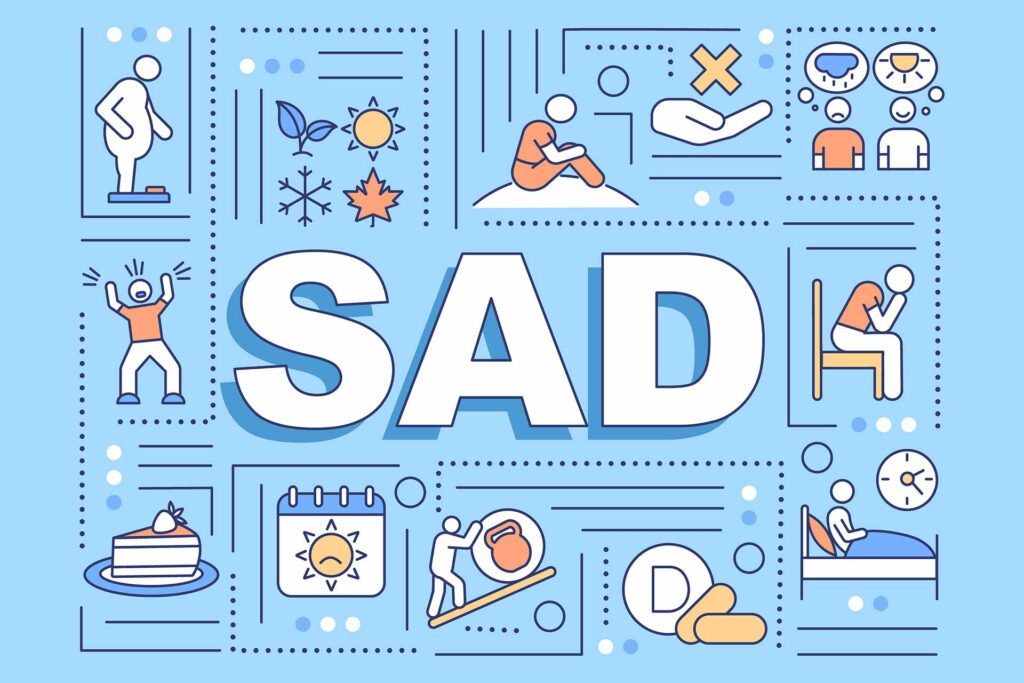
While many people will say they are affected by the ‘winter blues’, seasonal affective disorder (SAD) occurs when this seasonal feeling really starts to impact on your life and you feel depressed. The term SAD may be more applicable than ‘winter blues’ when seasonal depression has been present for the previous two years.
SAD can often be linked to other difficulties in a person’s life. Exploring some of these issues in counselling can address the roots of an individual’s vulnerability and suffering; this may take the edge off SAD. If you feel full on depressed rather than ‘low’ in mood it is also important to see your GP and discuss your options.
If you feel you need a counsellor give Walnut Grove a call. We have a psychotherapist/counsellor who could help.
If you feel you want to tackle the symptoms yourself, adopting a positive attitude towards SAD can be hugely beneficial. Combining this with lightbox therapy, can be very successful. A lightbox gives off a bright light that mimics natural outdoor light. Please remember that you should also be taking Vitamin D3.
In a study of the citizens of Tromsø, a small town nestled deep within the Arctic Circle, mindset was found to be a vital factor in combating winter depression. Those who showed appreciation for the change in season were found to be far less susceptible to the potential downsides of a ‘polar winter’, despite having only 3 hours of light in the middle of winter!!
Perhaps we should try to think of some personal winter joys:
- Christmas
- Mulled wine
- Being cosy, maybe a crackling fire
- Comforting foods like stews and soups
- If we are lucky, crisp snow and a snowball fight!
- Winter clothes – lovely warm jumpers and boots
There are also various possible physical benefits to the cold:
- It can help us think more clearly; research suggests that the body uses more glucose when it is warm so the cold may free your brain to plan that new project.
- We could burn a few more calories – turn down your heating by 1-2 degrees and use some energy to stay warm.
- We could increase brown fat which is better than white fat. Brown fat is the fat cells brimming with mitochondria that burn energy and produce heat in the body which, ironically, helps keep us healthy. Exposing your body to cool, and even cold temperatures, may help recruit more brown fat cells.
- There are fewer allergies – for those of you who suffer from hay fever the winter means no symptoms.
- Lower temperatures help reduce inflammation.
- Cooler temperatures improve sleep; the ideal temperature of your bedroom is 17°C or less.
- Your immune system gains a boost. One of the more remarkable consequences of the cold is that it triggers our immune system to ramp things up.
- The cold unexpectedly benefits our skin because its blood vessels are less likely to get red and puffy due to constriction. The cold also reduces the need for the skin to produce as much oil as it does when warmer. This means the skin stays clearer.
Perhaps then, if we can embrace the winter and the cold, we can actually feel physically and mentally better. If we feel happier, we will also feel more motivated to be active and get out and do things.
We are fully open for all patients throughout this, and any future, lockdown as we are an essential healthcare service taking the pressure off the NHS.