The pandemic has impacted many aspects of life including our options for and amounts of physical activity. Over the past year, one third of us report being more active, one third less active and one third have remained about the same in terms of activity.
Many of us may assume we are in the more active category. A myriad of prompts including the media, our phones, fitness technology and family and friends remind us that we should exercise and modern apps can also motivate us and record our daily activity levels. How then would you fare in a direct comparison between your actual activity level and the official updated World Health Organisation (WHO) Guidelines on Physical Activity? Do you actually know how much activity is advised for good health?
The latest evidence from WHO reaffirms that all adults (18-64) should undertake regular physical activity and aim to achieve at least 150 to 300 minutes of moderate-intensity, or 75 min to 150 minutes of vigorous-intensity physical activity per week. An equivalent combination of moderate-intensity and vigorous-intensity physical activity is also acceptable. For children and adolescents, an average of 60 minutes per day of moderate-to-vigorous intensity physical activity across the week leads to health benefits.
Defining moderate and vigorous intensity physical activity can be tricky. Essentially these are broad definitions and for everyone it will be slightly different. Put simply, however, moderate intensity is activity at a level where you get slightly out of breath and feel warm yet can still continue a conversation. Examples include brisk walking, pushing a lawn mower and riding a bike on the flat. Vigorous intensity refers to activity where you feel out of breath and might not be able to continue a prolonged conversation. Examples are running, heavy digging and swimming lengths. Light intensity activity includes slow walking or other incidental activities that do not result in a substantial increase in heart rate or breathing rate.
On a difficulty scale of 0-10 relative to an individual’s personal capacity, vigorous-intensity physical activity would usually score a 7 or 8, moderate-intensity physical activity 5 or 6 and light intensity less than a 5.
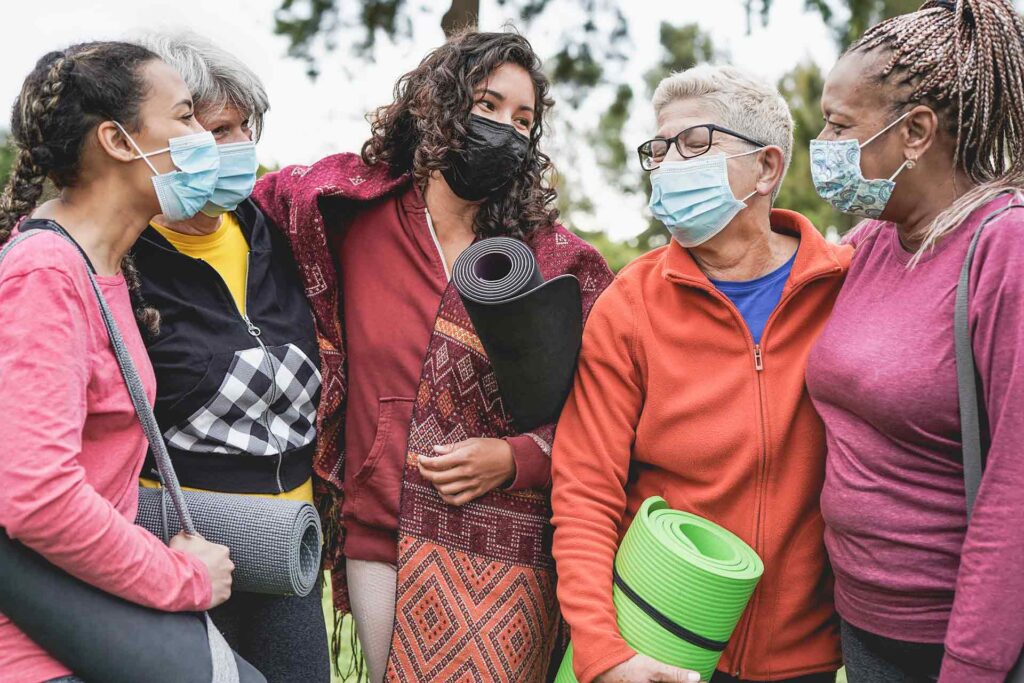
The latest WHO guidelines also reinforce the value of muscle-strengthening activity for all adults and children. In older adults (65 years and over) they also highlight that activity should address balance and strength training to enhance functional capacity and prevent falls. Activities such as Yoga, Tai Chi and Pilates are important in this respect.
For all populations, the benefits of physical activity and limiting sedentary behaviour outweigh the potential harms. Exercise has great health benefits both immediately and in the future as you age. For those who are not currently active, some physical activity is better than none. Sedentary individuals should start with small amounts of physical activity and gradually increase frequency, intensity and duration over time as appropriate.
For those who spend a lot of time sitting, such as wheelchair users or those with limited mobility, physical activity can be adapted. Our seated Pilates class at Walnut Grove, for example, focuses predominantly on chair-based exercises using a wide variety of Pilates equipment to help strengthen muscle groups. The chair is also used for balance so that you are not seated the whole time unless you need to be.
Figuring out how to create opportunities for activity has been tricky over the last 12 months as many of our usual forms of activity were shut or limited. We also experienced social change such as limited childcare options and travel restrictions which necessitated the hunt for new ways of being active. On a national level, Joe Wicks involved many of us with his daily PE classes on YouTube. More locally, Walnut Grove’s classes quickly adapted to offer online options to keep its clients active in uncertain times. Many of us have also discovered that our local neighbourhoods enable us to participate in simple free activities such as walking and cycling.
Returning to my question about how your activity levels measure up, if you have maintained or increased your activity levels, then well done on your fantastic efforts. Please share your strategies with others and try to motivate them. When I personally take stock, I reflect that I have tried to maintain my activity by using my local neighbourhood for walking and cycling. I have also been mindful to limit my sedentary time and have created opportunities to drip feed physical activity into my day.
There are many barriers to increasing activity levels, including pain, muscle and joint problems. If you need help with this, please contact the Physiotherapy and Osteopathic Teams at Walnut Grove; we can assist with your physical activity plan for 2021.