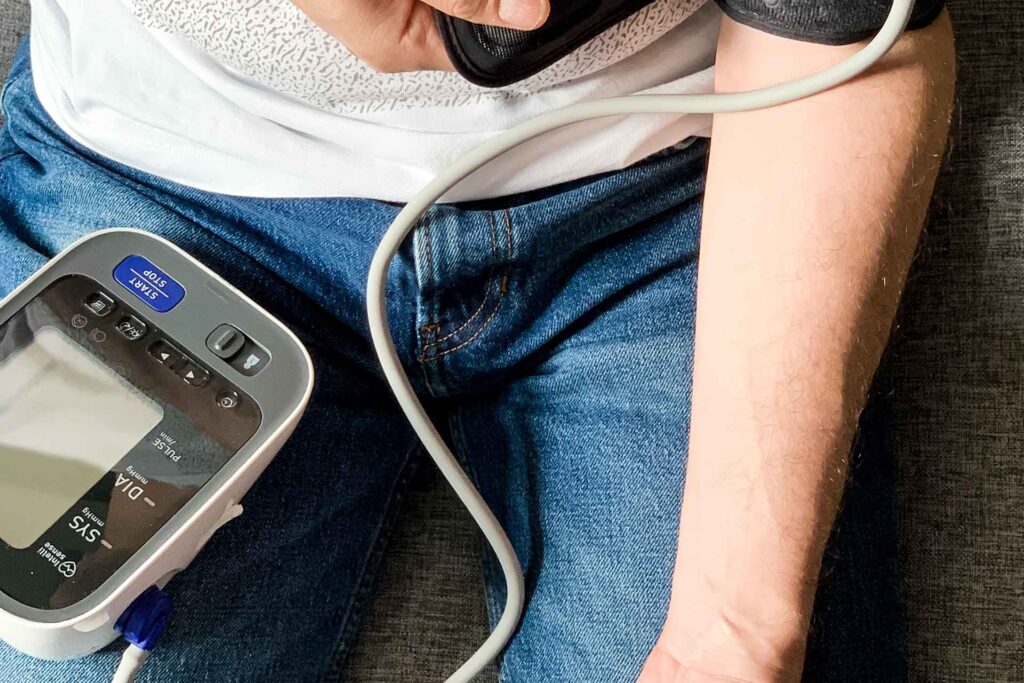
Know Your Numbers! Week 2021 was a campaign by Blood Pressure UK offering free blood pressure checks during the period 6-12 September but blood pressure is an important measure of health all year round. If you haven’t checked your BP recently then think about visiting your pharmacist or doing a home check.
Home monitoring offers a way for YOU to take control of your health, feel confident, and take the pressure off the NHS. It gives you a practical way to know your numbers without visiting your GP or pharmacist and it really can save lives.
High blood pressure can lead to heart attacks, strokes, dementia and other illnesses. Once you know your numbers, you can get support to bring your blood pressure under control and prevent these diseases.
Around a third of people in the UK have high blood pressure but most do not realise. High blood pressure does not have any symptoms so its existence can only be established by a blood pressure check.
What is blood pressure, how is it measured and what is high blood pressure?
When your heart beats, it pumps blood around your body to give it the energy and oxygen it needs. As the blood moves it pushes against the sides of the blood vessels and the strength of this pushing is your blood pressure. Your heart has 2 sounds known as “lub-dub”. The first sound is the heart pushing the blood out (the lub). This is the systolic figure shown as the top number on a blood pressure reading. The dub is the relaxation as the blood vessels rebound. It is known as the diastolic figure and is the lower reading on your blood pressure measurement.
Blood pressure is measured in millimetres of mercury (mmHg) by a simple machine called a syphgmomanometer. When your blood pressure is measured it will be reported as two numbers, a top number and a bottom number so if your reading shows as 120/80mmHg, your blood pressure is 120 over 80. If your blood pushes against your blood vessel walls with too much force, it places a strain on your heart and blood vessels. This is high blood pressure, known as hypertension.
Ideally, we should all have a blood pressure reading between 90/60mmHg and 120/80mmHg. Most people in the UK have blood pressures higher than the ideal (somewhere between 120/80mmHg and 140/90mmHg) but which fall below the usual cut-off for diagnosing high blood pressure. If you are in this range, you could develop high blood pressure in the future so taking steps to lower your blood pressure will reduce your risk of health problems.
How high, is high?
If you are over 50 then the most important number is the upper one (systolic) and, although there are many different studies, in the UK treatment is considered at a systolic of over 140mmHg. In this age group the diastolic reading (lower number) is thought to be less important although it may be more closely monitored if it is well over 90mmHg.
It is critical to remember you cannot rely on a one off blood pressure reading. Many factors can affect the reading, not least of which the equipment itself which is notoriously inaccurate. Physical exertion, stress of any kind including ‘whitecoat syndrome’ or fear of having your blood pressure taken, time of day, room temperature, a full bladder, eating and drinking and even an animated conversation can all influence the reading. Ideally there should be several readings over a number of weeks or even a 24 hour reading to monitor BP overnight when we probably obtain the most accurate results.
Blood pressure does not tend to be something that you feel or notice. High blood pressure usually has no symptoms, so the first sign can sometimes be a heart attack or a stroke. That is why it is called the silent killer. The only way to find out if you have high blood pressure is to have a blood pressure check.
Blood pressure is generally raised by lifestyle choices and so can be lowered by the same! Factors that can raise your BP are smoking, poor diet, obesity, lack of exercise and stress. I am sure that none of these come as a surprise since they are the same indicators for most chronic conditions of the wealthy western world.
Most people will not require medication if they can take control of these risk factors; surely the best option to avoid the side-effects of what would be a lifetime on pills. Increasing dietary protein and fibre and a low carbohydrate diet have been shown in some studies to reduce BP. A small piece of dark chocolate a day can also have a lowering impact so it’s not all bad! Various smaller studies suggest liposomal Vitamin C, magnesium and even watermelon extract can also help. My own favourite suggestion is to drink more water with a pinch of salt in every pint; most of us are dehydrated and maintaining a good blood volume helps and it’s free!.
You can do it and it could save your life. Get checked and if you need more help or advice talk to us at Walnut Grove. Either email healthcare@walnutgroveclinic.com or call 01275 818303.