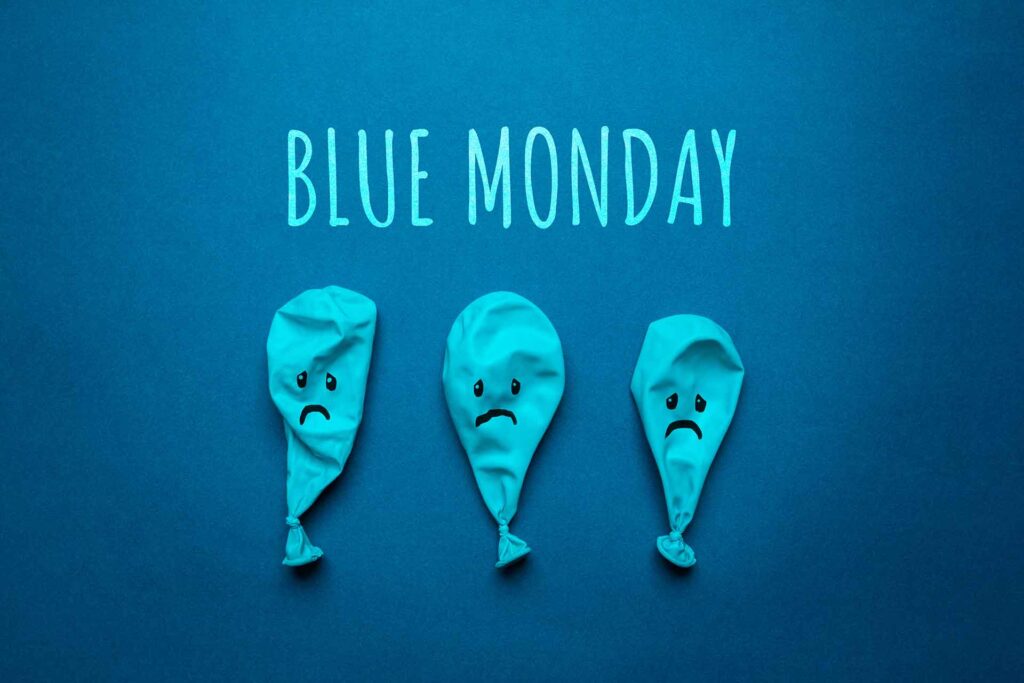
I was recently informed that Blue Monday was just around the corner, a term that apparently marks the most depressing day of the year, officially Monday 18th January. As I write, 2021 is underway, and the year lies before us. Christmas is well and truly over and the celebration, hope, rest and relief from cold dreary winter nights it can bring for some people is a distant memory. Our lives as we knew them have dramatically changed during the Covid pandemic, so I find myself wondering what that means for Blue Monday this year.
I’m not sure I believe in Blue Monday exactly, but I do believe in low moods as well as depression, the effect they can have on people’s lives and the serious impact these changes can have on our mental health and well-being. As a qualified therapist, and someone who has experienced many low moods and depression in the past, I want to tell you that if you experience these feelings, it is not your fault.
There is often a stigma attached to mental health issues and the symptoms. There is still a denial of such issues and a prevailing attitude remains in society, as well as within ourselves, that we should ‘just get on with it’. Some people are able to do this but others sometimes can’t, and that’s ok. Everyone is unique and symptoms present differently for everybody.
A good way to view depression and low moods is as a means by which your body, as well as your mind, can tell you that something is wrong and should be addressed and tended. Perhaps something has occurred internally within you that has been buried or pushed aside because, with all good intentions, you have ignored what is happening and tried to persevere. Alternatively, maybe something has happened externally and you feel out of control, at the mercy of the situation and insignificant to its power. Possibly, you have lost yourself along the way; everything feels pointless and nothing resonates with you in the way it once did.
Some common signs of feeling low or depressed are:
- Lethargy
- Suicidal thoughts
- Irritability/anxiety/worry
- Negative thinking/hopelessness
- Feeling tearful/lack of joy in life
- Feeling numb/empty/isolated
- Brain fog/over or under eating and sleeping
- Self-harming or drinking, smoking, using drugs more than usual
- Apathy towards your own life as well as an apathy towards interacting with others
These are just some examples but in whichever way depression or low moods present themselves to you and, for whatever the reasons, there are ways to address them. You can get back on track, back in control of your own self and back in full alignment.
The first thing I always ask people is if they want this to change because sometimes people don’t want their depression to go away. It may be serving a purpose and could require exploring more deeply, one-to-one with a professional. If you seek change, however, then you have already taken responsibility and put yourself back in the driver’s seat. This can have the potential to be empowering and motivating.
Here are some simple ways to ease depression/low moods:
- Exercise every day – even going for a short walk in the fresh air can help.
- A well balanced diet – protein, carbohydrates, good fats, an array of varied colourful fruit and veggies. During lockdown, it’s fun and healthy to get creative in the kitchen.
- Get organised and find your purpose – think about what you want out of life in the long and short term. How would you like your life to be and what goals (big or small) you can tick off to get there?
- Get back in touch with yourself – write lists, create goals, and express how you feel on paper. Taking a break from screens can really inspire creativity!
- Notice when you feel joyful and safe – making a mental note of your positive thoughts when you feel them can reinforce your good feelings. It’s ok to appreciate the small pleasures in life, so every day try to do lots of little things that bring you joy.
- Gratitude – remembering who and what you are grateful for and expressing that. Even the smallest things can make a difference to your mood.
- Self-compassion and listening – it is always ok to stop and take stock of what you are going through and feeling every day. You can be your own greatest supporter and listen to yourself. What do you need?
- Keep in touch – with as many people that you can, as much as you can, and when you can. Use video calls, social media, text, phone calls or even snail-mail, a letter can come as a really welcome surprise. Alternatively, try meeting new people; there are lots of new online communities popping up as a result of the pandemic so, in a way now, can be a great time to make new friends.
- Saying no – no is an important word to keep you well and safe. Don’t overwork yourself or take on too many commitments. You can’t please everyone and trying to is a sure-fire way to burn yourself out. Ensure you leave yourself with enough energy in the tank to relax at the end of each day.
- Adopting a mindful attitude – being present in the moment, at least once a day, can really help your mind get comfortable with slowing down and appreciating what you have right now. It can also give you a feeling of being in control and, at the same time, relaxed. You might enjoy slowing down for a cup of tea, reading a book, playing a fun game with your children, cooking or learning something new.
Exploring this list might be enough to help, but if you feel the need to work on yourself further and really address personal issues and the way you operate, therapy could be useful for you. Please contact me at Walnut Grove and I’d be happy to discuss this with you in more detail.