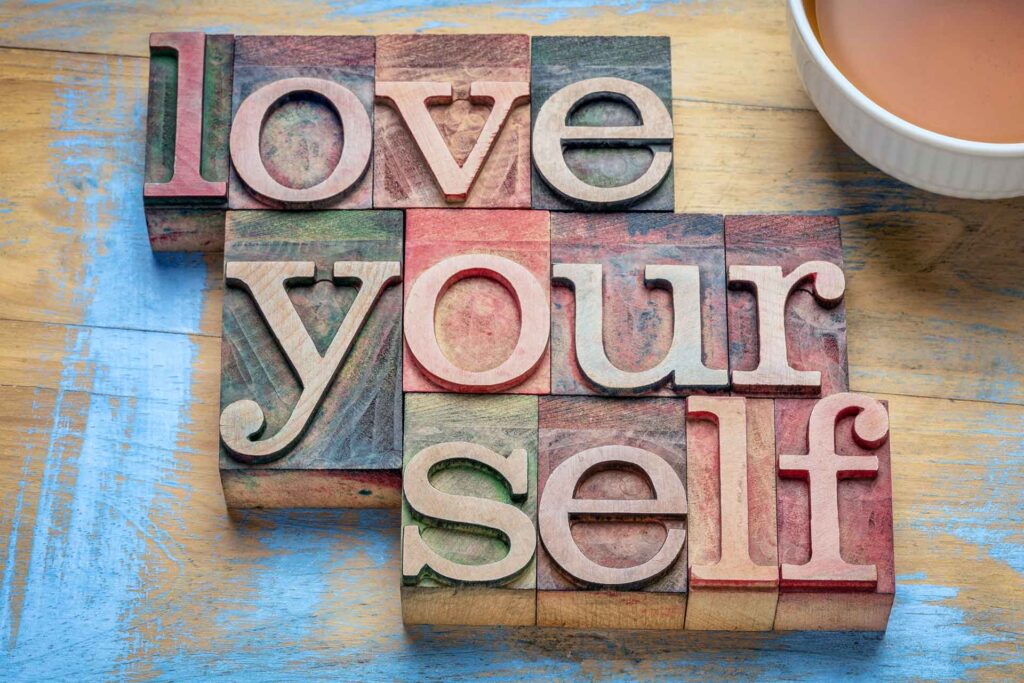
Self-esteem is used to describe a person’s overall subjective sense of personal worth or value. In other words, self-esteem may be defined as how much you appreciate and like yourself regardless of the circumstances. Your self-esteem is defined by many factors including:
- Self-confidence
- Feeling of security
- Identity
- Sense of belonging
- Feeling of competence
Other terms that are often used interchangeably with self-esteem include self-worth, self-regard, and self-respect.
Having healthy self-esteem can help motivate you to reach your goals, because you are able to navigate life knowing that you are capable of accomplishing what you set your mind to. Additionally, when you have healthy self-esteem, you are able to set appropriate boundaries in relationships and maintain a healthy relationship with yourself and others.
People with low self-esteem tend to feel less sure of their abilities and may doubt their decision-making process. They may not feel motivated to try novel things because they don’t believe they’re capable of reaching their goals. Those with low self-esteem may have issues with relationships and expressing their needs. They may also experience low levels of confidence and feel unlovable and unworthy.
The converse to that is people with overly high self-esteem may overestimate their skills and may feel entitled to succeed, even without the abilities to back up their belief in themselves. They may struggle with relationship issues and block themselves from self-improvement because they are so fixated on seeing themselves as perfect.
Many theorists have written about the dynamics involved in the development of self-esteem. The concept of self-esteem plays an important role in psychologist Abraham Maslow’s ‘hierarchy of needs’ which depicts esteem as one of the basic human motivations.
Our self-esteem can be influenced by many things but life experience is thought to be the most significant factor. Those who consistently receive overly critical or negative assessments from family and friends, for example, will likely experience low self-esteem. Whereas positive reinforcement from parents, teachers and other people surrounding and shaping a person’s life can encourage a healthy self-esteem. Our self-esteem should grow throughout childhood and young adulthood.
There are other factors that may have an impact such as, disability, genetics, illness, physical abilities, socioeconomic status and thought patterns.
How do you know whether you have a healthy self-esteem, it’s not like measuring your shoe size!
Here are some simple ways to tell if you have healthy self-esteem:
- Avoid dwelling on past experiences
- Believe you are equal to everyone else, no better and no worse
- Express your needs
- Feel confident
- Have a positive outlook on life
- Say no when you want or need to
- See your overall strengths and weaknesses and accept them
The converse to that is a low self-esteem, which can manifest in a variety of ways:
- You may believe that others are better than you.
- You may find expressing your needs difficult.
- You may focus on your weaknesses.
- You may frequently experience fear, self-doubt, and worry.
- You may have a negative outlook on life and feel a lack of control.4
- You may have an intense fear of failure.
- You may have trouble accepting positive feedback.
- You may have trouble saying no and setting boundaries.
- You may put other people’s needs before your own.
- You may struggle with confidence.
Low self-esteem has the potential to lead to a variety of mental health disorders, including anxiety disorders and depressive disorders. You may also find it difficult to pursue your goals and maintain healthy relationships. Having low self-esteem can seriously impact your quality of life and increases your risk for experiencing suicidal thoughts.
Fortunately, there are steps that you can take to improve your self-esteem:
- Become more aware of negative thoughts.
- Challenge negative thinking patterns. When you find yourself engaging in negative thinking, try countering those thoughts with more realistic and/or positive ones.
- Use positive self-talk. Practice reciting positive affirmations to yourself.7
- Practice self-compassion. Practice forgiving yourself for past mistakes and move forward by accepting all parts of yourself.
Low self-esteem can contribute to or be a symptom of mental health disorders, including anxiety and depression.
If you need more help or advice please speak to your GP or call us at Walnut Grove – we can point you in the right direction.