What is important and what can you do if you want to try to avoid medication.
Scientists are not sure why hypertension (high blood pressure – BP) happens although diet, lifestyle and being older are considered to be the main contributors. Obviously, we cannot do much about the latter but although in danger of repeating myself in every article, we can do loads to improve the former!
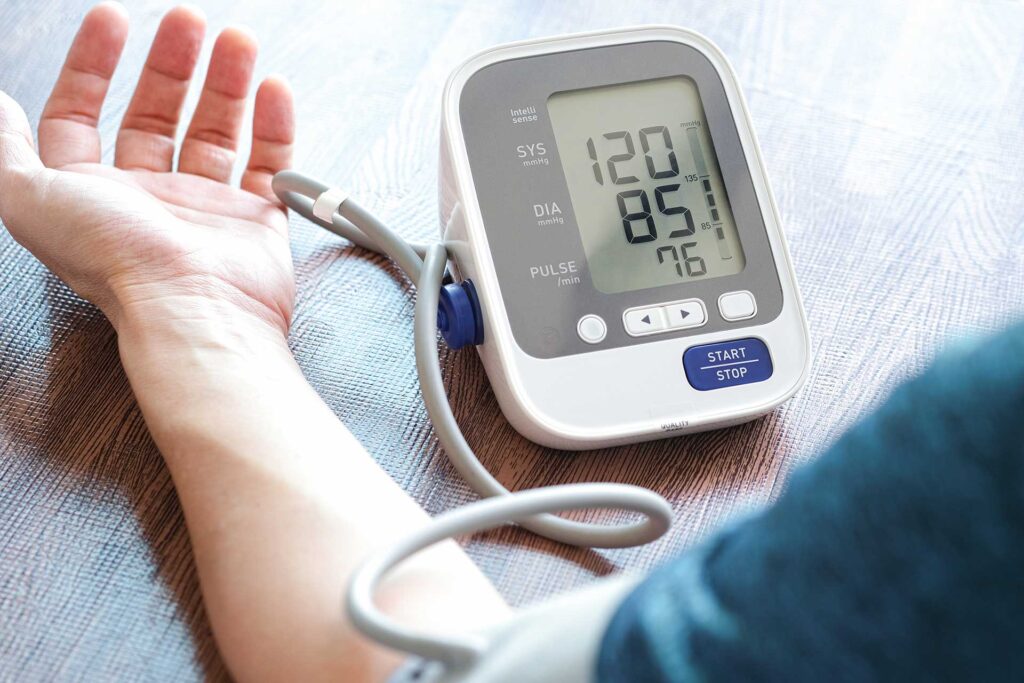
Because high blood pressure has no symptoms, blood pressure readings are the most common and frequent tests performed in medicine, often using a portable device called a ‘sphygmomanometer,’ which uses a cuff wrapped around
the arm. Most of you will have had your BP taken at some point.
Blood pressure levels are determined by two readings made in millimetres of mercury (mmHg): systolic blood pressure measures arterial pressure when the heart beats (the first figure); and diastolic blood pressure measures the pressure between heart beats (at rest).
What is high?
Well, that has changed massively in my practising lifetime. The levels have come down and down and age and gender play a part. Isolated systolic pressure in the over 50’s particularly in men is the most important and the diastolic figure is all but irrelevant. This was reversed in the under 50’s.
Any BP reading above 140/90mm/Hg will trigger a prescription for antihypertensives. Largely because single drugs aren’t working, European ‘best practice’ guidelines recommend that more than one drug is needed, particularly for patients with high-normal blood pressure and a history of heart or circulatory disease. The three most common two-drug therapies combine a diuretic with a calcium channel blocker, a beta blocker, an ACE inhibitor or an angiotensin-receptor blocker.
Even if your blood pressure is over the so-called ‘normal’ threshold of 140/90 mmHg and you’re terrified that your high blood pressure will lead to a heart attack or stroke, some simple lifestyle changes can usually bring your blood pressure back to normal.
Why you may not have high blood pressure
There are two good reasons why you should distrust your blood pressure readings and check things out far more before you consent to taking drugs to manage your condition.
- Your blood pressure doesn’t stay static, but rises and falls throughout the day, depending on your circadian rhythms and even your mood. It’s highest in the morning, it can even differ from one arm to the other, and emotions like anxiety from stress can have an enormous effect on a reading. Just sitting in a waiting room, waiting for your doctor to take your blood pressure, can cause your systolic pressure – the first number – to rise by as much as 30 mmHg, a phenomenon referred to as ‘white-coat hypertension.
- The equipment, even the means of taking blood pressure, is hopelessly inaccurate. The sphygmomanometer – Has been referred to as ‘medicine’s crudest investigation.’
So before resorting to medication it may be worth trying other ways to reduce your BP level, talk to your GP, they will be supportive of this assuming your levels are not dangerously high.
Natural ways to control your blood pressure
- Keep your weight down. Losing weight, if you’re overweight, will lower blood pressure naturally.
- Engage in regular exercise, at least 20 minutes per day.
- Avoid processed carbs and try to eat mainly low-GI foods.
- Avoid the Pill and NSAIDs such as ibuprofen, which raise blood pressure.
- Take a heavy metals blood test to check your levels of lead and cadmium, which can cause hypertension.
- Cook with traditional fats such as coconut oil, lard, duck fat or butter.
- Limit alcohol to one drink per day.
- Eat potassium-rich foods such as bananas or take a potassium supplement, which will help to dramatically lower blood pressure.
- Take magnesium, which may also help to lower blood pressure (suggested daily dosage: 200-600 mg)
- Get enough calcium in your food. Low levels of calcium may bring on hypertension.
- Make sure your levels of vitamin D3 are adequate to ensure better uptake of calcium (suggested daily dosage: 4-5000 IU vitamin D if over 18)
- Invest in a high-quality probiotic. Such a supplement can help to lower blood pressure after a few months.
- Take CoQ10 supplements to bring down blood pressure (suggested daily dosage: 150 mg)
- Make time for relaxation or mind-body techniques, particularly yoga, meditation or the Chinese therapy qigong.
- Explore hypnosis with a qualified, experienced practitioner – there is good evidence that this can lower BP.
- Consider acupuncture with a qualified, experienced practitioner. One session of acupuncture could significantly lower blood pressure levels for up to six weeks in people with hypertension.
- Consider homoeopathy, some remedies have been shown to lower BP.
If you want some help or advice, please call us at Walnut Grove, we may have the practitioner to help or be able to suggest an alternative.