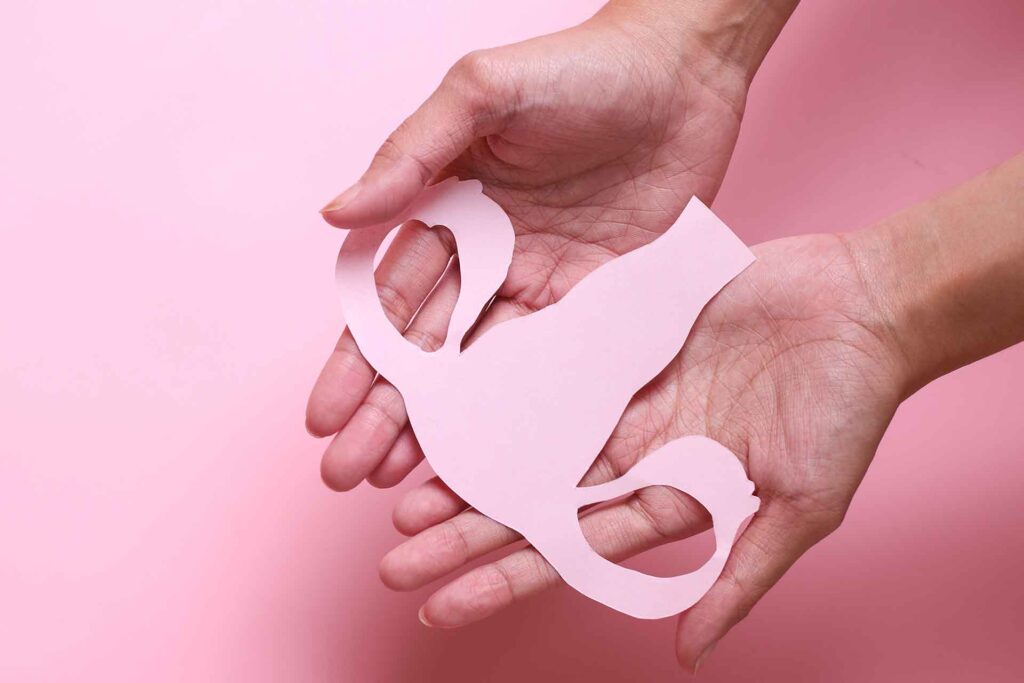
Endometriosis is the name given to the condition where cells similar to the ones in the lining of the womb (uterus) are found elsewhere in the body, generally in the abdominal cavity.
Each month these cells react in the same way to those in the womb, building up and then breaking down and bleeding. Unlike the cells in the womb that leave the body as a period, this blood has no way to escape.
In the UK, around 1.5 million women and those assigned female at birth are currently living with the condition, regardless of race or ethnicity. Endometriosis can affect you from puberty to menopause, although the impact may be felt for life.
During the menstrual cycle, hormones are released at different stages of the month. When the egg is released the body releases hormones to cause the lining of the womb to thicken in order to receive and prepare for the fertilised egg. If the egg isn’t fertilised, pregnancy doesn’t occur and that lining needs to break down and be shed causing the bleeding of menstruation or a period.
In endometriosis, cells similar (but not exactly the same) to the ones in the lining of the womb grow elsewhere in the body. These cells react to the hormones during the menstrual cycle each month and in addition have an altered response to hormones causing increased inflammation which may be the cause of most of the pain and bleeding. However, as there is no way for this blood to leave the body, this can cause inflammation, pain and the formation of scar tissue.
Some facts and figures about endometriosis.
- 1 in 10 women of reproductive age in the UK suffer from endometriosis.1
- 10% of women world-wide have endometriosis – that’s 176 million worldwide.
- The prevalence of endometriosis in women with infertility be as high as to 30–50%.
- Endometriosis is the second most common gynaecological condition in the UK.
- Endometriosis affects 1.5 million women in the UK a similar number of women affected by diabetes.
- On average it takes 7.5 years from onset of symptoms to get a diagnosis.
- Endometriosis costs the UK economy £8.2bn a year in treatment, loss of work and healthcare costs.
- The cause of endometriosis is unknown and there is no definite cure.
Endometriosis can have a significant impact on quality of life in a number of ways, including:
- Pain during sexual activity
- Pain during bowel movements
- Pain during exercise
- Bowel or urinary pain or dysfunction
- Heavy or irregular bleeding
- Bloating, nausea or vomiting
- Infertility, difficulties getting pregnant, or recurrent pregnancy loss
- Allergies, migraines or fatigue that worsens around menses
- Lower back pain or leg pain during menses
However, with the right treatment many of these issues can be addressed, and the symptoms of endometriosis made more manageable.
It’s important to remember that:
- Endometriosis is not an infection
- Endometriosis is not contagious
- Endometriosis is not cancer
Diagnosis can be a lengthy process because the symptoms are similar to many other conditions. It is important to give as much information about your symptoms to the GP as possible.
The only way to be 100% sure of a diagnosis of endometriosis is by laparoscopy (a small exploratory operation where a camera is inserted into the pelvis via a small cut in the navel). This camera can see the endometrial tissue, where it is and what it is attached to. If appropriate the tissue can be removed at that operation.
There are no scans, blood tests or physical examinations that can diagnose, confirm or deny the presence of endometriosis.
Because the endometrial tissue can be lodged in such a variety of places, symptoms are very varied and because of this diagnosis can be difficult and is often delayed. In the UK there is an average of 7.5 years between first complaining of symptoms and diagnosis.
What happens when you have the diagnosis?
Currently there is no cure for endometriosis but there are a variety of treatment options that your GP or consultant should discuss with you. Treatment aims to reduce symptoms and improve quality of life so that women can live with the condition under control. The treatment options will vary depending on your age, the severity of the symptoms and the location of the endometrial tissue. There is no one pathway to follow and women may start with minimal intervention and then need more as time goes on.
The treatment options available are:
- Pain relief
- Hormone treatment
- Surgery
At Walnut Grove I am afraid we have no magic bullet either but sometimes Acupuncture (traditional Chinese), osteopathy or physiotherapy can help with symptoms and work alongside the treatments that have been offered. A naturopathic and dietary approach can also be helpful although sadly at the moment we don’t have someone who can help with that – if you give us a call, we may be able to point you in the right direction if this is a route you want to follow.