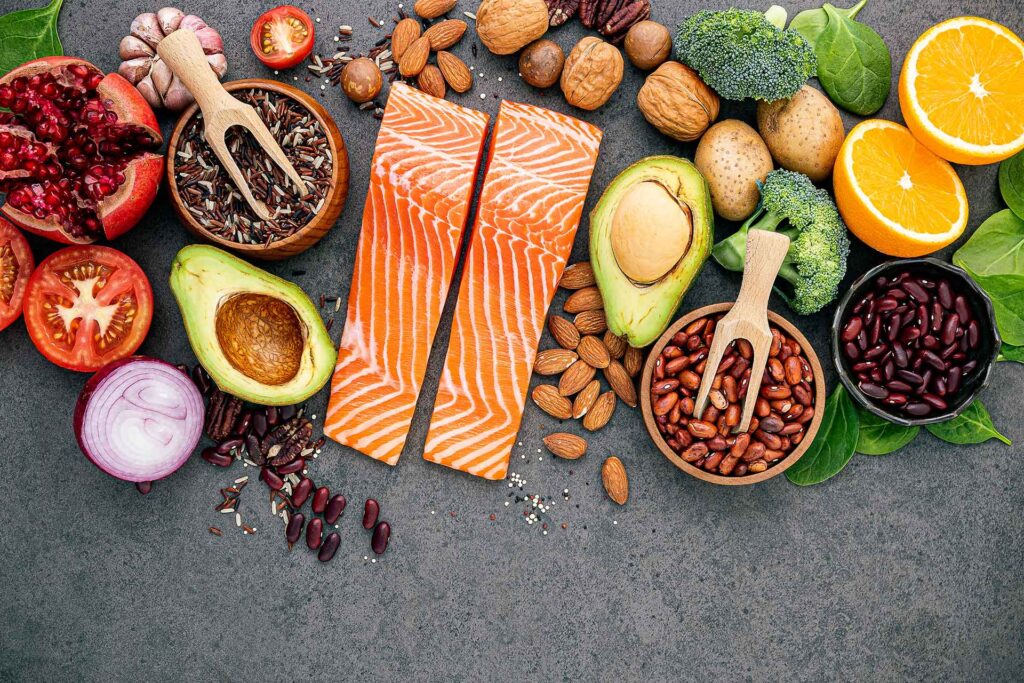
Last month we reviewed the first part of the Eatwell guide, which included the following groups; Fruit & vegetables, Starchy carbohydrates and Proteins. This month we are focusing on the second part which all are smaller ‘slices’ of the guide, which means eating less of these types of foods.
Dairy and alternatives
Milk and dairy products are good sources of protein and a wide range of vitamins and minerals. Some of the food products in this group are fermented such as yoghurt and cheese are lower in lactose and contain helpful gut bacteria that may benefit our gut bugs. Choose low-fat and low-sugar varieties where possible, if opting for dairy alternatives, read the food labels to choose options that are unsweetened and fortified with vitamins such as calcium which are most similar to their dairy counterpart. Note: butter, cream and ice cream are not included in this group as they are high in saturated fat.
What counts?
Milk such as skimmed, semi-skimmed, whole
Cheese such as cheddar, parmesan, paneer
Yoghurt and fromage frais
Drinks such as some smoothies, kefir and lassi
Cream cheese and quark
Dairy alternatives made from soya, nut, oat, rice, quinoa, coconut and pea such as soya drinks and yoghurts<
Top tips:
- Add fruit to low-fat plain yoghurt instead of choosing flavoured yoghurt.
- Swap whole milk for skimmed or semi-skimmed milk.
- Use low-fat yoghurt to thicken sauces, marinade meat or as part of a dip such as tzatziki.
Oils and spreads
The last and smallest group of the Eatwell guide is the dietary fat, providing essential fatty acids (which the body cannot make itself) and helps us absorb the fat-soluble vitamins A, D, E and K. Fats are high in calories, providing 9 kcal per 1 gram of fat, even the healthier unsaturated fat, so it’s important to use them in small amounts. Saturated fat which is solid at room temperature is found in the likes of butter, coconut oil, cakes, pastries and fatty cuts of meat and has been associated with raising blood cholesterol levels and heart disease. Swapping saturated fats for unsaturated fats is a great way to minimise the risk.
Examples of Oils and Spreads
High in Unsaturated fatsHigh in Saturated fats
| Vegetable oil | Goose fat |
| Olive oil | Coconut oil |
| Sunflower oil | Ghee |
| Rapeseed oil | Palm oil |
| Spreads made from these oils | Butter or lard |
Top tips:
- Try using a non-stick pan which helps to avoid extra fat when cooking
- Higher smoke oils such as sunflower and rapeseed oils are good for roasting
- Lower smoke point oils such as olive oil and walnut oils are good in salad dressings and for drizzling
Foods high in fat, salt and sugar
This group falls outside the Eatwell guide as they are not needed for a healthy diet, however, they can certainly be a part of a healthy diet. This is when ‘in moderation’ is applicable. Stats have shown that most people eat too much saturated fat, salt and sugar. Our brains are wired in a way that certain chemicals are released when we eat these foods, we get a surge of the happy hormone and it often leaves us craving for more! However, too many of these foods can impact our health, so try to reduce your intake where possible.
Examples of foods high in fat, salt and sugar
| Chocolate | Savoury snacks< such as crisps and patties |
| Confectionary such as sweets | Cream and ice cream |
| Cakes and biscuits such as shortbread and moon cakes | Fried foods such as chips |
| Puddings and pastries such as rice pudding | Sugar-sweetened beverages such as Coke, Sprite, Fanta |
| Jams, honey and syrups | Rich sauces and gravies |
| Butter, lard and ghee | Condiments such as mayonnaise and soy sauce |
Top tips:
- Try swapping syrup for mashed banana and cinnamon in porridge
- Choose canned fruit in natural juice or water with no added sugar rather than in syrup
- Go for reduced or lower salt versions of stock cubes, sauces and condiments
The Eatwell guide is just that, a guide. It highlights what food groups we should focus on for a healthy diet. We are all unique so our needs may vary but broadly speaking this guide is a fundamental base to use. Need help with your diet? I offer appointments where I coach individuals to make sustainable incremental changes to their diet leading to happier healthier lives.
Get in touch via email with questions and/or comments: dietitianroxaneb@gmail.com