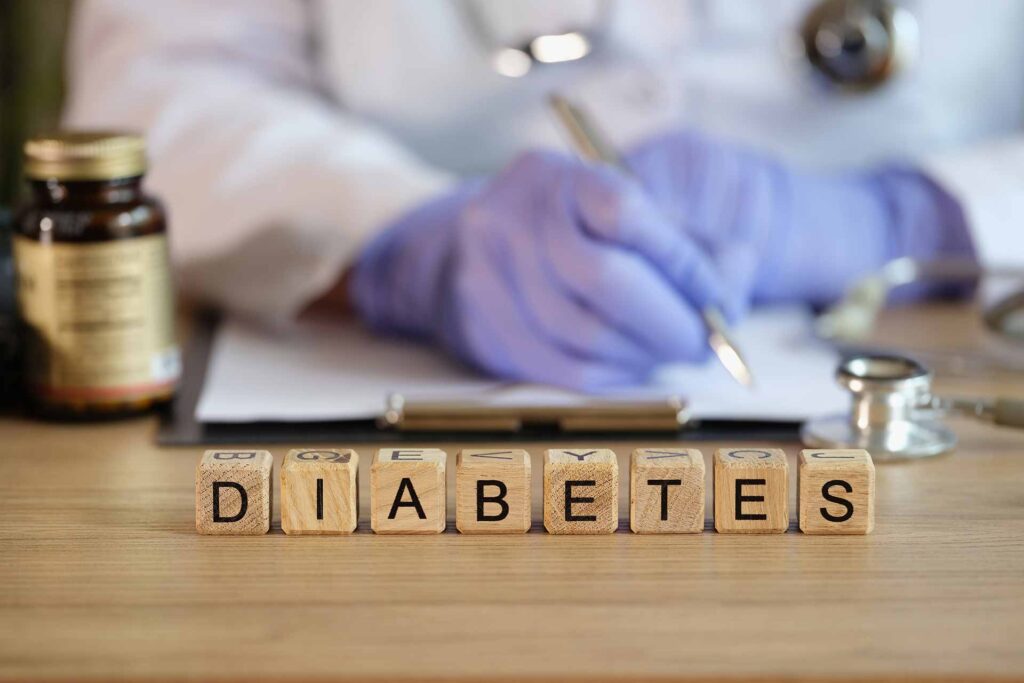
Diabetes is a condition where there is no insulin, not enough insulin or there is insulin resistance. We all need insulin to live. It does an essential job. Glucose in our blood stream, from the breakdown of carbohydrate in our food is moved into our cells for fuel by the action of insulin.
There are 2 types of diabetes:
Type 1 – this is where the pancreas is attacked by the body (an autoimmune condition) and so the pancreas cannot make insulin. This causes the blood glucose levels to be very high and can cause damage to body organs if not treated.
About 8% of people with diabetes in the UK have type 1 diabetes. It’s a serious and lifelong condition.
I am not going to talk about this condition here
Type 2 – This is where the pancreas cannot make enough insulin or the body becomes resistant to the insulin. This condition is also characterised by high blood sugar levels but unlike type 1 diabetes it is a disease caused by unhealthy eating and increased weight and so can be treated and ‘cured’ with lifestyle modification for most although some people may continue to require medication.
Around 90% of the people living with diabetes in the UK have type 2.
13.6 million people in the UK are at risk of developing type 2 diabetes.
Type 2 diabetes develops more slowly than type 1 and generally at an older age, although shockingly with the increase in childhood obesity there is now an increase in Type 2 in a younger age group. A lot of people don’t get any symptoms, or don’t notice them. But you may notice:
- going to the toilet more often, especially at night
- feeling more tired, because your body can’t get enough glucose in to your cells for energy
- losing weight without trying
- genital itching or thrush
- cuts and wounds taking longer to heal
- blurred vision
- feeling extremely thirsty
A lot of people are undiagnosed – if you have some of these symptoms see your GP to get a blood test.
Risk factors for diabetes:
- Carrying extra weight especially if it’s around your middle.
- Being over 40 (although see the point I made above)
- Two to four times more likely in people of South Asian descent and African-Caribbean or Black African descent.
- Two to six times more likely to get type 2 diabetes if you have a parent, brother, sister or child with diabetes.
- High blood pressure
- Smoking
- Polycystic ovary syndrome
- Some mental health conditions
- Sedentary lifestyle
- Too much alcohol
- Prolonged disturbed sleep
The chronic complications of type 2 diabetes are eye problems, foot problems, heart attack and stroke, kidney problems, nerve damage………. I could go on, anything that requires a blood supply can be affected so the list is long! The cost to the individual but also to society and the NHS is huge but the good thing is you can improve your diabetes and in a lot of cases completely bring it into remission.
HOW?
If you smoke or drink a lot – cut down or better still, quit.
Lose weight – especially improve your hip to waist measurement – your waist needs to be smaller!
Eat healthily – the traditional advice was to lower fats but there is a lot of evidence now to support ketogenic diets – low carbohydrate diets with an increase in healthy fats – if you need advice talk to us.
Be more active – get a fitness tracker, aim for 12500 steps per day and limit your sitting – it’s very motivating to watch your progress with a tracker and they don’t have to be expensive.
No one says it will be easy BUT for sure if you tackle this to prevent it happening or to reverse it if you already have it, you WILL increase both the length of your life and most importantly the quality of your life – FOR SURE the evidence is very clear – there are few conditions where the evidence is so clear cut!!
If you need help and advice – GET IT. Talk to us at Walnut Grove, we have a variety of ways we can help you or talk to your GP – they can also point you in the right direction. The most important thing is START – the sooner you do the damage is being limited. If you have a friend or relative that you think of reading this – nudge them in the right direction – you are not interfering, you are potentially saving their life.